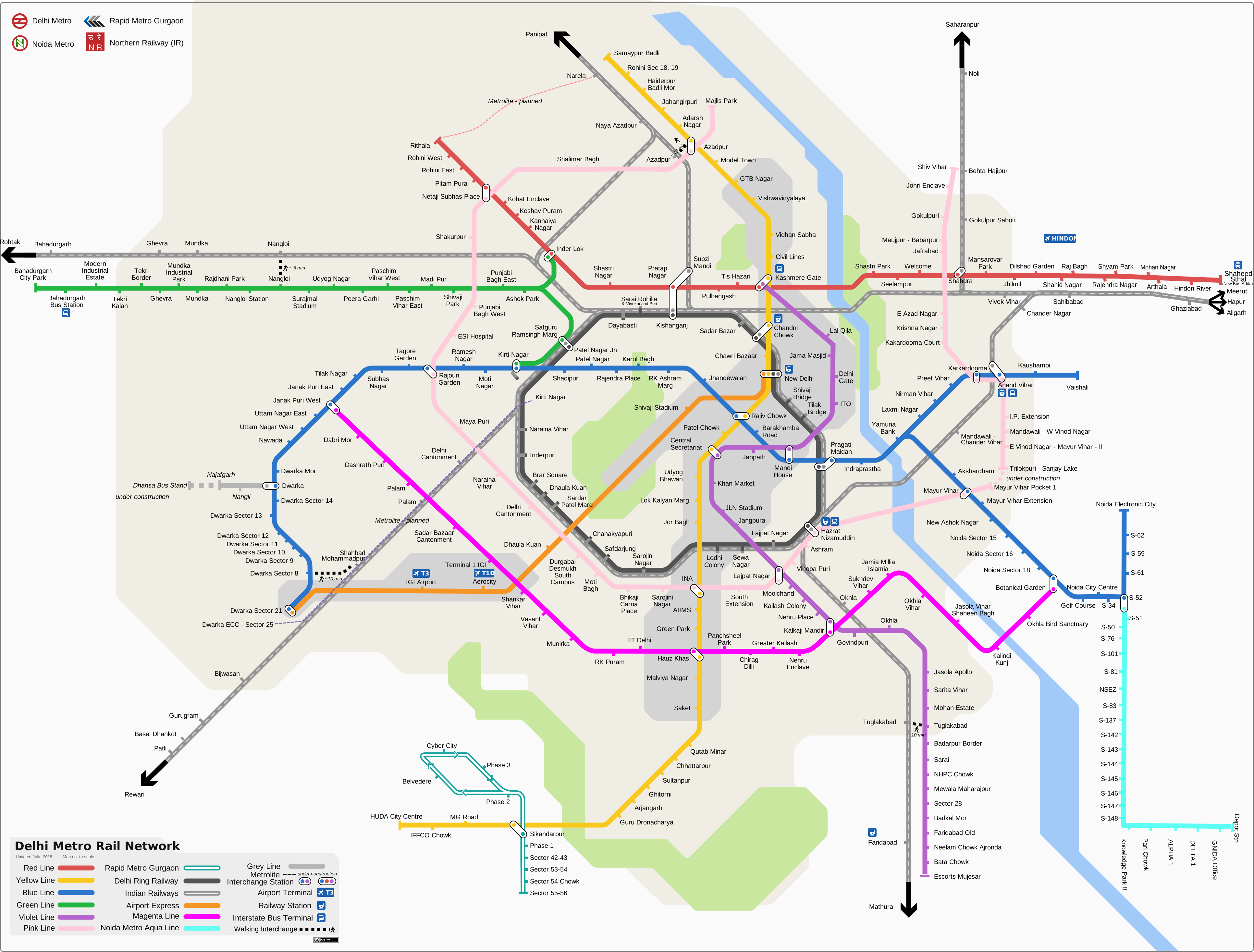
History & Evolution of Delhi Metro Network
The Delhi Metro is a mass rapid transit system serving Delhi and its satellite cities. It is by far the largest and busiest metro in India, and the second oldest after the Kolkata Metro. Construction started in 1998, and the first section on the Red Line opened in 2002. The network has grown rapidly to over 390 km with 286 stations, becoming a model for other metro systems in the country.
Commuter Tips for Delhi Metro Network
Navigating the Delhi Metro efficiently requires a few insider tips. First, always travel with a Smart Card — it offers a flat 10% discount on every journey, and an additional 10% off during off-peak hours (before 8 AM, 12 PM to 5 PM, and after 9 PM). This means frequent commuters can save nearly 20% on most of their daily rides. For airport travel, the Airport Express Line (Orange Line) connects New Delhi Railway Station to Indira Gandhi International Airport Terminal 3 in just 18 minutes, making it the fastest route from the city centre.
Rush hours on the Delhi Metro are typically 8:30 AM to 10:30 AM and 5:30 PM to 8:30 PM on weekdays. During these periods, platforms at interchange stations like Rajiv Chowk, Kashmere Gate, and Central Secretariat become extremely crowded. Plan your journey to arrive at these stations a few minutes early, and always board from the less-crowded middle coaches rather than the ends. Women passengers benefit from dedicated ladies' coaches on every train — look for the pink markings on platform floors.
For navigation within stations, follow the colour-coded signage matching your destination line. At major interchanges, the walking distance between platforms can be 3–5 minutes, so factor this into your travel time. Most metro stations have free WiFi, which is convenient for last-minute route lookups. The Metro Rail app (DMRC's official app) allows you to plan routes, buy QR code tickets, and check real-time train schedules.
Delhi Metro Connectivity Guide
The Delhi Metro integrates seamlessly with multiple modes of transport. At Kashmere Gate station, you can board buses to Old Delhi, Chandni Chowk, and Lal Qila. At Rajiv Chowk and New Delhi stations, the metro connects with Delhi's main railway hubs and inter-state bus terminals. For last-mile connectivity, Delhi Metro Feeder Buses (DMFC) operate from 35+ stations, covering surrounding residential areas not directly served by metro.
Auto-rickshaws and e-rickshaws are available outside every metro station. App-based cab services (Ola, Uber) have dedicated pick-up zones at major stations. The Rapid Metro in Gurgaon connects seamlessly with the Yellow Line at Sikanderpur and HUDA City Centre, providing extension into Cyber City and other Gurgaon business districts. Noida Metro (Aqua Line) connects to the Blue Line at Noida Sector 51.
For cycling enthusiasts, Metro Cycles (rental bikes) are available at over 20 stations including Hauz Khas, Saket, and Lajpat Nagar. These integrate with the metro to provide a complete, eco-friendly first-mile and last-mile solution across South and Central Delhi.
Feeder Bus Connectivity
Key stations with feeder bus services:
- Kashmere Gate
- Vishwavidyalaya
- Chattarpur
- Dwarka Sector 21
- Noida City Centre
Parking Facilities
Stations with authorized parking:
- Kashmere Gate
- Rajouri Garden
- Janakpuri West
- Hauz Khas
- Millennium City Centre Gurgaon
- Saket
Network Evolution & Future Plans
The Delhi Metro Phase IV expansion is well underway, with several new corridors planned. The Janakpuri West to RK Ashram (Janakpuri-Krishna Park Extension corridor) adds 28.92 km to the network. The Aerocity to Tughlakabad section will improve connectivity to the airport from South East Delhi. The Inderlok to Indraprastha extension creates a circular connectivity corridor across the network's mid-section.
When complete, Phase IV will add approximately 65 km of track and 45 new stations, bringing the total network to nearly 460 km. The expansion prioritises underserved areas in South Delhi, West Delhi, and the Delhi-NCR fringe regions. The RRTS (Rapid Regional Transport System) is also fully operational on the Delhi-Ghaziabad-Meerut corridor, offering 180 km/h top speed for intercity commuters. Delhi Metro stands as a benchmark for urban mass transit in all of South Asia.